The frightening masterwork of American Gothic literature “The Black Cat” by Edgar Allan Poe goes deep into the psyche of its narrator, it examines the darkest regions of the human mind. This short story, first published in 1843, is a classic example of Poe’s ability to put together different aspects of horror, psychology, and the macabre.
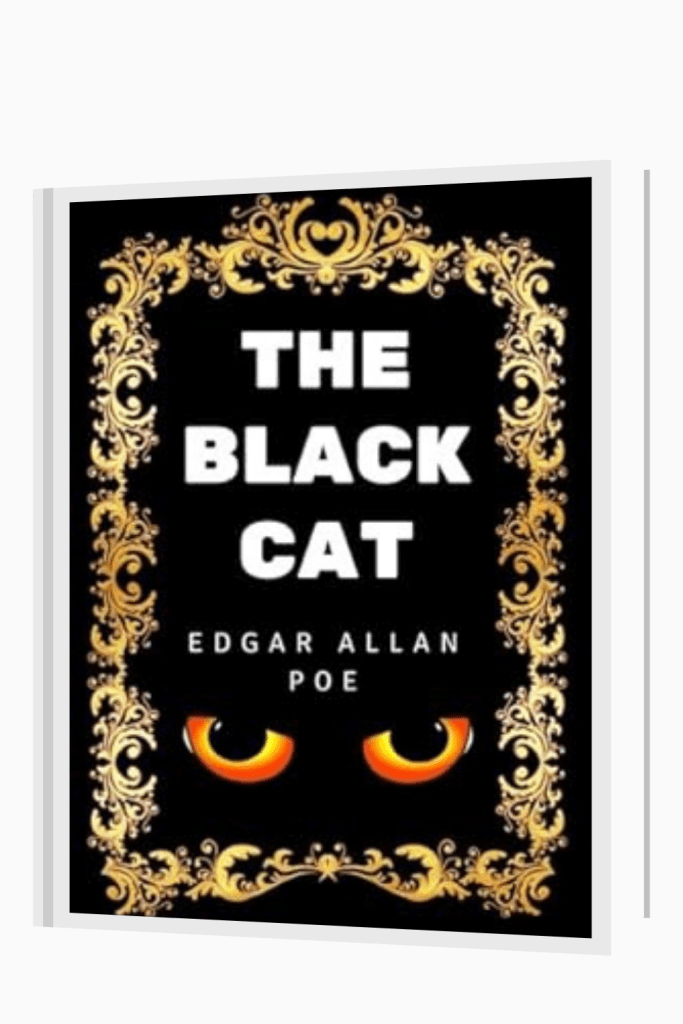
Image Source: amazon.com
The story is told by an unidentified protagonist who, from the start, reveals to the reader that he is about to die and recounts the events that led up to his demise. This draws the reader quickly into this confessional language, which creates an aura of gloom and intrigue.
“The Black Cat” is essentially a story about a man’s fall into lunacy. The narrator starts out as a dedicated and animal-loving man before transforming into a vicious and remorseless killer. Pluto, his favorite black cat, is the driving force behind his change. Pluto is initially his beloved companion, but as the novel progresses, the cat becomes a symbol of the narrator’s moral deterioration and craziness.
Poe’s talent in this story is exemplified by his ability to convey the narrator’s psychic decay with astounding precision and complication. Readers can observe the narrator’s sanity deteriorating as the story progresses. His ancestors are distinguished by cruelty, violence, and substance abuse, all of which are depicted in graphic detail. Poe’s journey from loving pet owner to murderer is both fascinating and unsettling, as he challenges us to ponder the weakness of the human mind and the proclivity for evil that resides in all of us.
The symbolism in “The Black Cat” adds another element to the plot. Pluto, the titular cat, represents the narrator’s shame and inner suffering which resonates with some of us. The existence, absence, and reappearance of the cat takes on an unsettling meaning, and its mutilation is a dramatic and brutal turning point in the story.
Poe’s storytelling method is as superb as it has always been. He uses descriptive and atmospheric descriptions to create a creepy atmosphere, bringing readers into the gloomy world of the protagonist’s troubled mind. The choice of first-person narrative heightens the story’s impact by placing readers squarely in the shoes of a person on the verge of lunacy.
“The Black Cat” also raises questions regarding the nature of guilt, remorse, and the rational-irrational divide. It forces readers to consider whether the narrator is tormented by supernatural powers or whether his insanity is totally self-inflicted. This ambiguity adds to the story’s complexity, giving it open to interpretation and debate.
“The Black Cat” by Edgar Allan Poe is a disturbing and psychologically profound tale of lunacy, remorse, and the evil that dwells within human nature. Poe’s excellent storytelling and examination of the human psyche elevate this short story to the ranks of Gothic literature classics. It is a must-read for everyone who likes the macabre and the unnerving since it leaves an indelible impact.
 MACIJI