Jack Kerouac’s ‘On the Road’ is now regarded as a classic of American literature, first published in 1957. It’s more than just a book; it’s a restless, jazz-influenced trip through postwar America that captures the essence of a generation yearning for transcendence, independence, and purpose.
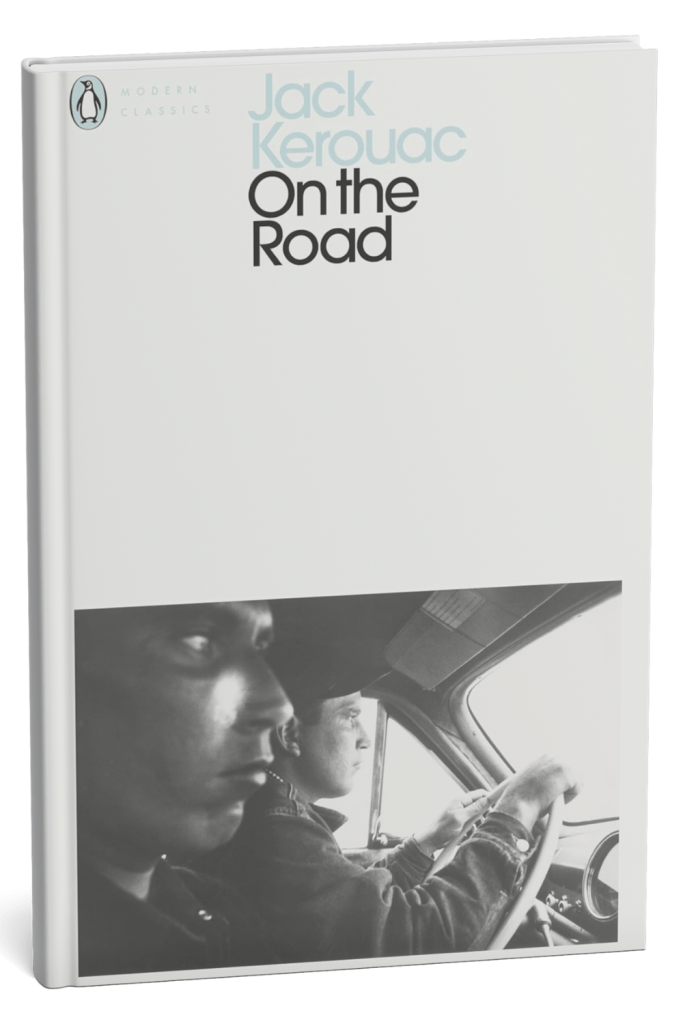
Image Source: amazon.com
The book follows Kerouac’s fictional character, Sal Paradise, as he travels across the country with the ebullient and charismatic Dean Moriarty, who is modelled by Kerouac’s real-life friend Neal Cassady. Along the journey, they meet a cast of misfits, poets, and drifters as they travel from New York to Denver, San Francisco, New Orleans, and even Mexico City. The emotional center of the story is formed by Dean’s wild enthusiasm and Sal’s introspective desire, as Sal pursues both the material path and a more profound feeling of spiritual fulfilment.
The improvisational rhythms of jazz are reflected in Kerouac’s distinctive “spontaneous prose” style, which is produced in an outpouring of inspiration on an uninterrupted scroll. Readers are drawn into the characters’ hectic lives by his lengthy, flowing phrases and unconventional use of punctuation, which convey a sense of urgency and motion. This unvarnished, unadulterated method was groundbreaking at the time and is now one of the novel’s most unique aspects.
Fundamentally, On the Road is a contemplation on liberty, defiance, and the pursuit of genuineness. With its depiction of life lived in pursuit of “It”—Kerouac’s phrase for ecstatic, unmediated experience—it portrays the disillusionment of postwar youth with materialism and conformity. Because the characters’ unrelenting quest for pleasure frequently results in moral and emotional weariness, the book also explores the boundaries of this freedom.
On the Road received both praise and criticism when it was first released. Although Truman Capote famously rejected it as “typing, not writing,” others viewed it as a revolutionary work that provided a new generation with a voice. The work had a wide-ranging impact, influencing not only literature but also fashion, music, and perspectives on freedom and travel. It has been described as life-altering by individuals such as Bob Dylan, and its influence may be observed in the subsequent countercultural movements.
On the Road has been criticised for its romanticisation of masculine recklessness and its depiction of women, despite being praised for its vitality and inventiveness. Reflecting the gender dynamics of the era, the female characters frequently act as backgrounds for the adventures of the male protagonists. However, the novel’s timeless appeal stems from its candid portrayal of a generation’s need for something greater, a desire that still strikes a chord with readers today.
In addition to being a travel narrative, On the Road explores the search for purpose in an often meaningless world. Readers are invited to accompany Kerouac on this voyage through his beautiful words and fascinating characters, experiencing both the exhilaration of the open road and the pain of unmet desire. This book is a genuine American classic that inspires, challenges, and survives.
 MACIJI