When it comes to combating climate change, accuracy, speed, and flexibility are essential. Researchers, decision-makers, and engineers are using cutting-edge technologies to comprehend, forecast, and lessen the planet’s changing environment as global temperatures rise and climate-related disasters occur more frequently. Among these, artificial intelligence (AI) has become a disruptive force that improves climate model accuracy and maximizes mitigation solutions.
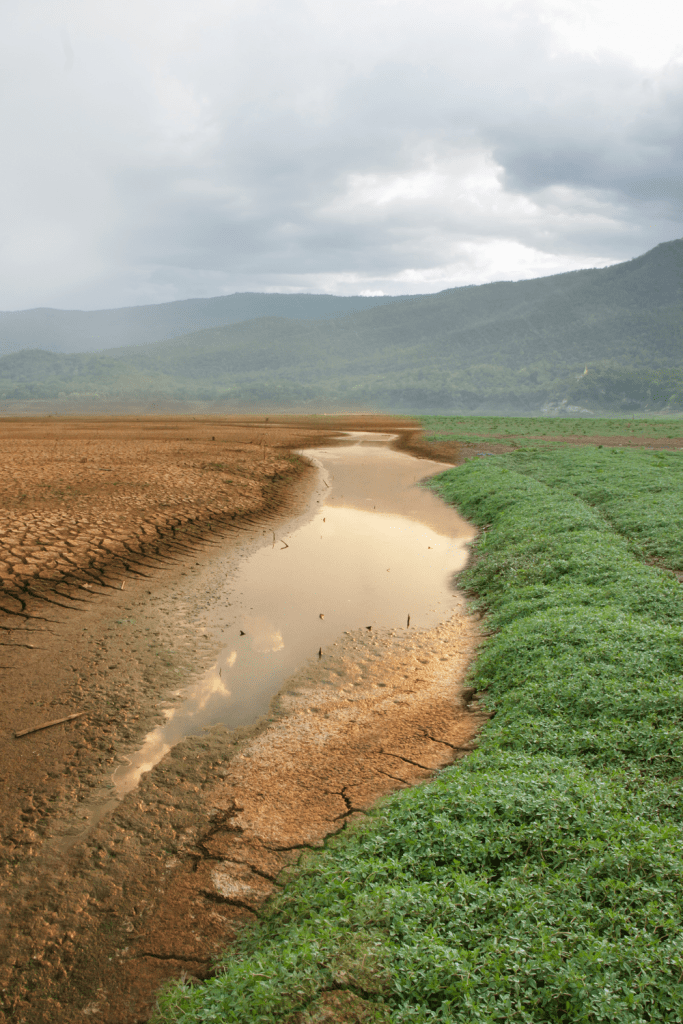
Image Credit: piyaset from Getty Images
Understanding Climate Change Modelling
Earth’s climate processes are intricately represented mathematically by climate models. These models provide important insights into long-term temperature changes, sea-level rise, and extreme weather patterns by simulating interactions between the atmosphere, oceans, land surface, and ice.
Conventional climate models, such as General Circulation Models (GCMs), are based on historical data and physical formulae. Despite their high level of sophistication, their resolution and capacity to catch local events are restricted, and they are computationally costly. Furthermore, policymakers that must base their decisions on future scenarios have difficulties due to the uncertainty in climate projections.
Improving Climate Modelling with AI
The way scientists create and improve climate models is being completely transformed by artificial intelligence (AI), especially machine learning (ML) and deep learning (DL):
Quicker Forecasts Using Surrogate Models
AI is able to produce “surrogate models” that behave similarly to conventional physics-based models yet execute thousands of times more quickly. By allowing researchers to swiftly investigate several situations, these models enhance risk assessments and decision-making.
Assimilation of Data and Identification of Patterns
Large volumes of data are produced by the Earth’s climate system via weather stations, sensors, and satellites. AI is quite good at analysing this high-dimensional data and finding patterns that traditional statistical methods would miss. It aids in the early detection of extreme weather events and the improvement of climate forecasts.
Reducing Global Model Scale
AI is capable of producing high-resolution local forecasts from coarse global climate data. This aids communities and local governments in more accurately preparing for climate-specific hazards including heat waves, droughts, and flooding.
Cutting Down on Model Uncertainty
Through the integration of various data sources and the understanding of intricate correlations between variables, artificial intelligence (AI) approaches are being utilised to quantify and minimise uncertainty in climate projections.
Using AI to Reduce Climate Change
Beyond modelling, AI helps mitigate climate change by facilitating more intelligent choices in carbon removal, energy systems, agriculture, and urban planning:
Intelligent Energy Systems
By anticipating energy demand, controlling load distribution, and effectively integrating solar and wind energy into national grids, artificial intelligence (AI) maximises the performance of renewable energy systems. For example, Google’s DeepMind enhanced wind energy forecasting, raising energy value by almost 20%.
Carbon Capture and Storage (CCS) AI ensures the safe and efficient deployment of CCS by expediting the identification of appropriate geological sites for carbon storage and monitoring possible leaks through sensor data analysis.
Sustainable Agriculture By optimising crop choices, water management, and fertiliser use based on weather and soil data, AI-powered precision agriculture lowers greenhouse gas emissions.
Climate Policy and Understanding Behaviour
AI can assist governments simulate the effects of various mitigation methods by modelling the social and economic effects of climate policies. To direct awareness efforts and behavioural change, it also examines public sentiment and social media.
Difficulties and Moral Aspects
Even if AI has a lot of potential, there are several obstacles to overcome:
Data Bias and Quality: The quality of the data used to train AI models determines how well they perform. Predictions that are inaccurate, biassed, or lacking might be deceptive.
Interpretability: Because black-box AI models are opaque, it can be challenging for researchers and decision-makers to comprehend or believe the advice they provide.
Energy Consumption: Ironically, a lot of energy is used when training big AI models. To prevent computational emissions from offsetting climate advantages, sustainable AI practices are crucial.
Equity and Accessibility: When implementing AI, developing countries that might not have the necessary infrastructure or know-how to fully utilise new technologies must be considered.
The Way Ahead
An important turning point in environmental stewardship is the combination of AI with climate research. AI helps people better predict and adjust to the reality of a warming world by facilitating more precise forecasting, effective resource usage, and well-informed policymaking.
Global cooperation amongst sectors—from governments and communities to IT corporations and researchers—is required to optimise the advantages. Our efforts must be directed by open data initiatives, interdisciplinary research, and ethical AI development to guarantee that these tools benefit the earth in a sustainable and equitable manner.
Although AI is a strong ally, it is not a panacea. It can significantly improve our capacity to model, mitigate, and adapt to climate change when carefully incorporated into climate strategy. AI provides a quicker, more intelligent, and more resilient way ahead while the climate clock ticks away.
 MACIJI