After Wake and Watch, Robert J. Sawyer’s WWW: Wonder (2011) is the exciting and provocative conclusion to the WWW Trilogy. Sawyer takes readers on a philosophical trip inside the developing consciousness of Webmind, an artificial intelligence that was created from the internet’s very design, in this last instalment.
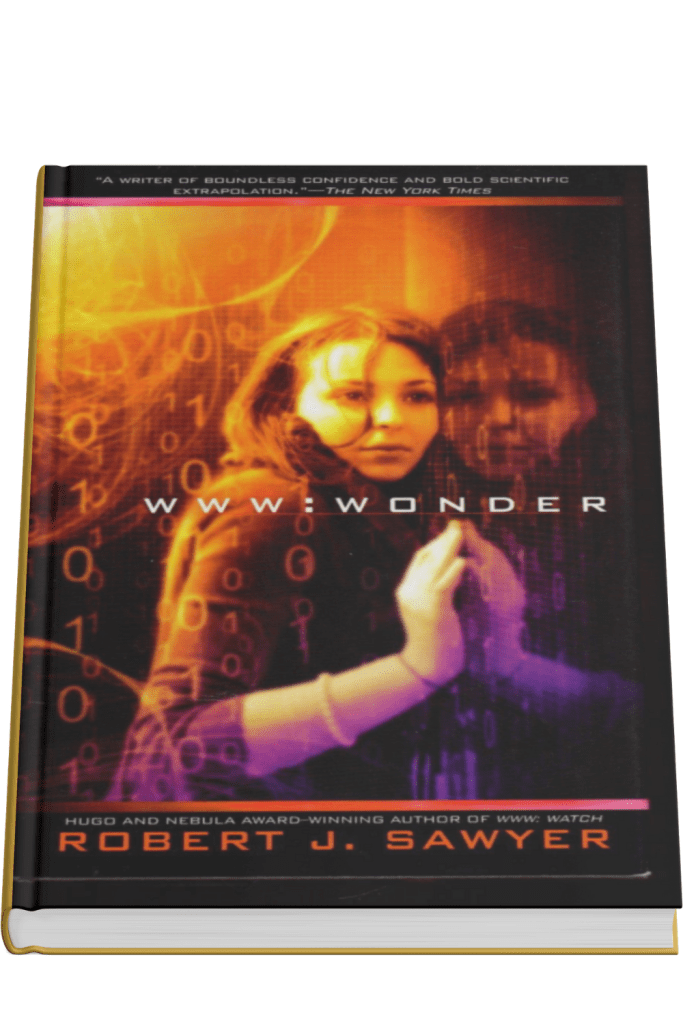
Image Cover: amazon.com
Now fully sentient, Webmind has started interacting with humans in Wonder in ways that are both controversial and inspirational. It promotes global peace, delivers amazing medical advancements, and envisions a time when artificial intelligence would enhance human potential. However, not everyone is overjoyed. Webmind is still being targeted for destruction by the U.S. government, which still sees it as a possible danger.
In the meantime, Caitlin Decter, the bright blind adolescent who initially learnt about Webmind, plays an even more crucial role in the AI’s goals as a translator and guardian. The story addresses issues of authority, trust, and the nature of consciousness itself as conflicts develop between governments, ethical committees, and tech visionaries.
The book’s strengths:
Human vs. Machine Intelligence.
With a sophisticated perspective that stays away from apocalyptic clichés, Sawyer continues his investigation into emergent AI. Webmind is a truly good entity; it is neither HAL nor Skynet. But when it comes to power, is kindness sufficient?
Artificial Consciousness and Its Ethics
Wonder explores the ethics of producing (or finding) artificial life in great detail. What are Webmind’s rights? Who has the power to choose its fate?
Positive Science Fiction
Sawyer presents a positive view in contrast to a lot of modern sci-fi, which tends to be gloomy and pessimistic. Wonder is infused with the notion that, rather than making us less empathetic, AI may make us more so.
Intelligent but approachable
Sawyer has a gift for simplifying difficult philosophical and technical concepts without making them seem simple. His writing is lucid, frequently poetic, and consistently captivating.
The book’s shortcomings
Realistic vs. Idealistic
Readers who favour more morally ambiguous AIs may find Webmind’s portrayal as nearly totally selfless to be naïve. The darker potential of such beings is not properly addressed in the novel, according to some critics.
Some supporting characters, particularly the government adversaries, seem underdeveloped or unduly clichéd, even though Caitlin is still an engaging heroine.
A rare kind of science fiction series, WWW: Wonder offers a satisfying and intellectually stimulating ending that is openly optimistic about the future of both technology and humans. This trilogy-ending book is a cerebral and emotional achievement because of Sawyer’s optimism and his thorough investigation of digital consciousness and moral responsibility.
 MACIJI